LPS work takes the form of real, working business tools — SOPs, toolkits, workflows, trackers, templates, and dashboards. Examples below are generalized to protect client confidentiality.
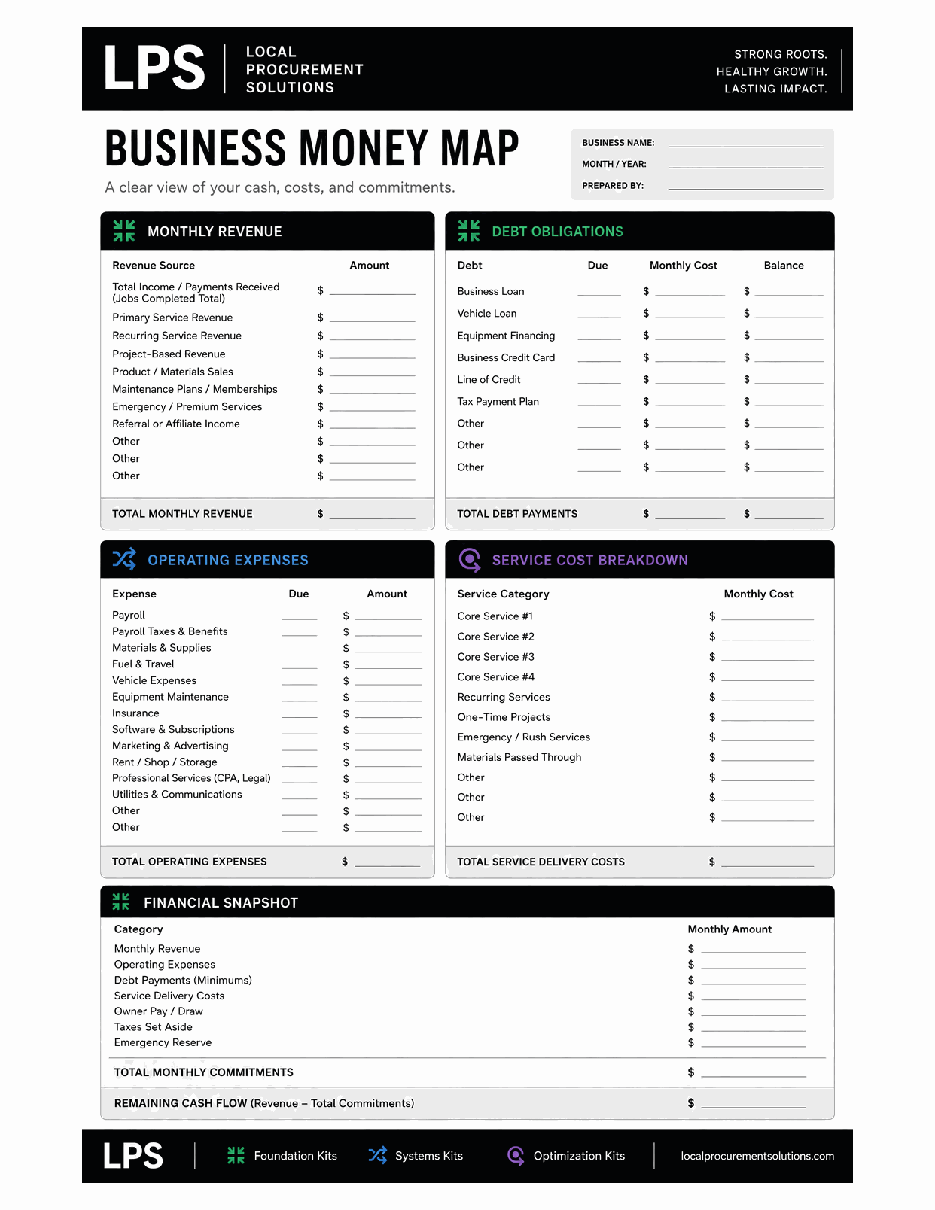
A one-page monthly view of the numbers a service-business owner actually needs: monthly revenue, debt obligations, operating expenses, service delivery costs, and remaining cash flow.
A structured client-intake system containing an SOP, intake form, discovery guide, pipeline tracker, communication templates, follow-up planner, completion checklist, implementation guide, and performance scorecard.
A documented estimate-to-proposal process with consistent pricing logic, reusable templates, and a review step — so every proposal goes out with the same professional standard.
A handoff checklist and workflow that moves sold work from sales to the field with complete information, clear ownership, and no verbal-only instructions.
An organized side-by-side comparison of vendor pricing, terms, and service — supporting deliberate purchasing decisions instead of reactive ones.
Budget templates and owner financial-review routines that turn "how are we doing?" into a scheduled, 30-minute monthly habit.
A dedicated AI workspace with custom business instructions, repeatable business chats, responsible-use and redaction rules, and a first-week action plan — built live in the owner's own account.
Pipeline design, field and record recommendations, and team-use documentation that turn an underused CRM into the business's single source of client truth.
Documented pricing structures and rate cards that make estimates consistent and profitability visible by service line.
Foundational standard operating procedures with the supporting forms and checklists that make them easy to follow and easy to hand off.
Tell us which process needs structure, and we'll show you what the deliverable would look like.